How AI Software Is Changing the Future of Work
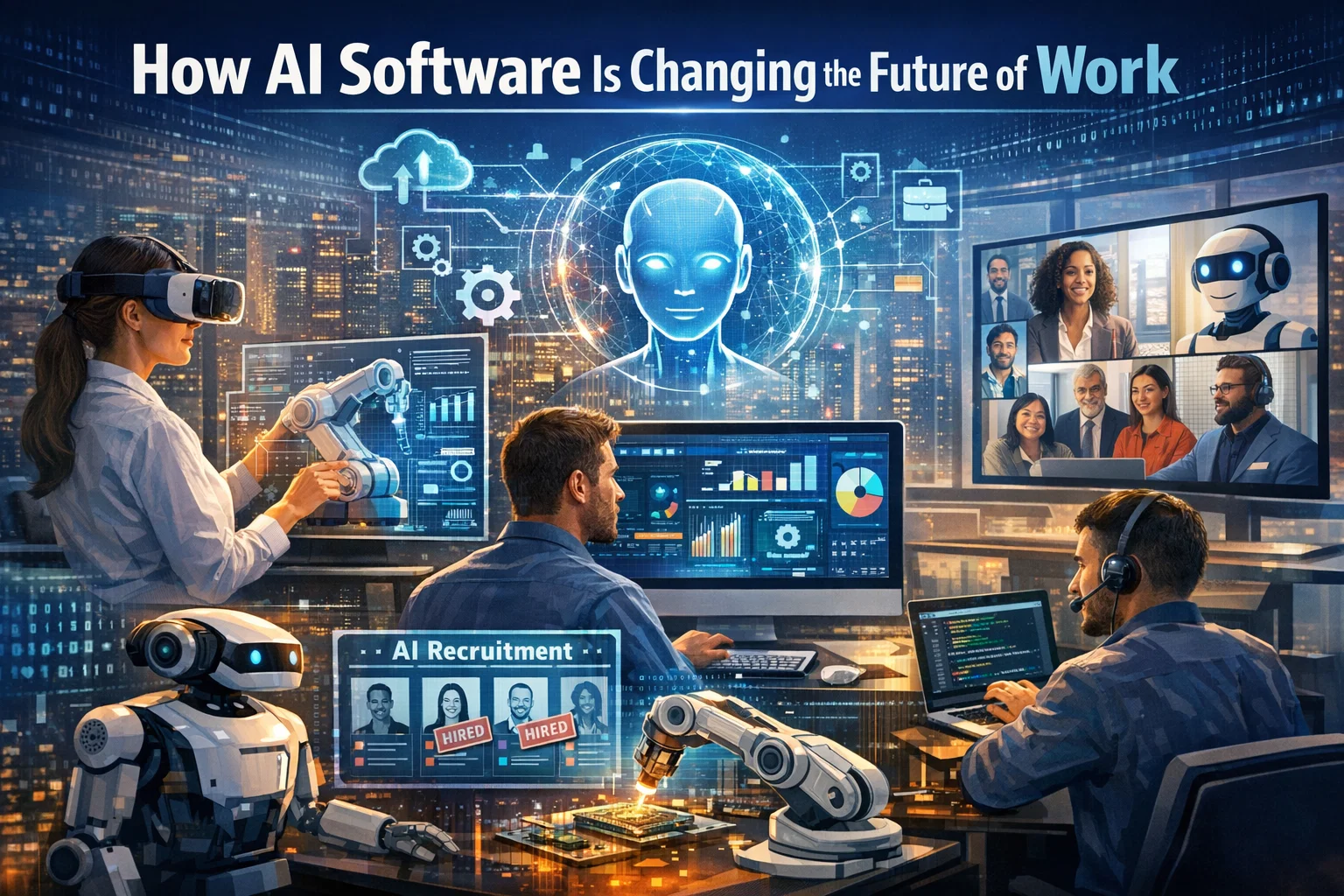
How AI Software Is Changing the Future of Work
Artificial Intelligence (AI) software is no longer a concept of the future—it is actively reshaping how people work today. From global enterprises to small startups, AI-driven tools are redefining productivity, collaboration, decision-making, and workforce dynamics. In Tier 1 countries such as the United States, United Kingdom, Canada, Australia, and across Europe, AI software adoption has accelerated at an unprecedented pace.
The future of work is being shaped by intelligent automation, data-driven insights, and AI-powered platforms that enhance human capabilities rather than replace them. This transformation is impacting nearly every industry, including finance, healthcare, insurance, SaaS, cybersecurity, marketing, and cloud computing—sectors known for generating high eCPM and CPC advertising demand.
Understanding AI Software in the Modern Workplace
AI software refers to applications and platforms that use machine learning, natural language processing, computer vision, and predictive analytics to perform tasks that traditionally required human intelligence. Unlike traditional software, AI tools continuously learn from data and improve over time.
In modern workplaces, AI software is embedded into:
- CRM and customer experience platforms
- HR and recruitment systems
- Project management and collaboration tools
- Financial planning and risk analysis software
- Cybersecurity and fraud detection platforms
The Shift From Manual Work to Intelligent Automation
One of the most significant ways AI software is changing the future of work is through automation. Repetitive, time-consuming tasks are increasingly handled by AI systems, allowing employees to focus on higher-value activities.
Examples of AI-driven automation include:
- Automated customer support using AI chatbots
- Invoice processing and expense management
- Email marketing automation and personalization
- Predictive maintenance in manufacturing
- Workflow automation in SaaS platforms
This shift significantly improves operational efficiency and reduces costs—key reasons why businesses in Tier 1 markets invest heavily in AI software.
AI and the Evolution of Job Roles
Contrary to popular belief, AI software is not eliminating jobs at scale; instead, it is transforming job roles. Many positions are evolving to require a blend of technical understanding, critical thinking, and creativity.
New job categories emerging due to AI include:
- AI operations managers
- Data analysts and AI trainers
- Automation specialists
- AI ethics and compliance officers
- Prompt engineers and AI workflow designers
These roles are particularly prominent in enterprise software, finance, and cloud services—industries with some of the highest-paying digital advertising keywords.
Remote Work and AI-Powered Collaboration
The rise of remote and hybrid work models has accelerated AI adoption. AI software plays a crucial role in enabling distributed teams to collaborate effectively across time zones.
AI-powered collaboration tools offer features such as:
- Smart meeting summaries and transcription
- AI-driven task prioritization
- Predictive project timelines
- Automated performance analytics
These tools help businesses maintain productivity while offering employees greater flexibility—a key trend shaping the future of work globally.
AI Software in Recruitment and Talent Management
Human resources is one of the fastest-growing areas for AI software adoption. AI-driven recruitment platforms streamline hiring by analyzing resumes, matching candidates to roles, and predicting employee success.
| HR Function | Traditional Approach | AI-Driven Approach | Business Impact |
|---|---|---|---|
| Resume Screening | Manual review | AI-based filtering | Faster hiring |
| Employee Retention | Reactive analysis | Predictive insights | Lower attrition |
| Performance Reviews | Subjective feedback | Data-driven metrics | Fair evaluations |
AI Software and Data-Driven Decision Making
Decision-making in the future workplace is increasingly powered by AI analytics. Instead of relying solely on intuition, leaders now use AI-driven insights to guide strategy, investment, and operations.
AI software enables:
- Real-time financial forecasting
- Market trend prediction
- Customer behavior analysis
- Risk assessment and compliance monitoring
These capabilities are especially valuable in finance, insurance, and enterprise SaaS—industries with high customer lifetime value and premium ad spend.
Security, Privacy, and Compliance in the AI Workplace
As AI software becomes more embedded in work environments, security and compliance are critical concerns. Leading AI platforms are designed to meet strict regulatory standards such as GDPR, SOC 2, and ISO certifications.
AI also enhances workplace security by:
- Detecting cyber threats in real time
- Preventing fraud and data breaches
- Monitoring system vulnerabilities
Why AI and the Future of Work Drive High eCPM and CPC
Keywords related to AI software, workplace automation, enterprise tools, and future of work attract advertisers from high-budget industries. SaaS providers, cloud platforms, HR tech companies, and financial services aggressively compete for visibility.
Traffic from Tier 1 countries delivers premium ad revenue due to higher purchasing power, longer subscription lifecycles, and enterprise-level deal sizes.
Challenges and Ethical Considerations
Despite its benefits, AI software also presents challenges. Bias in algorithms, transparency, and ethical use are ongoing concerns that businesses must address.
Responsible AI adoption includes:
- Transparent data usage policies
- Human oversight in decision-making
- Continuous monitoring for bias
- Clear accountability frameworks
The Long-Term Outlook: AI as a Workplace Partner
The future of work is not about humans versus AI—it is about collaboration. AI software acts as a powerful partner, augmenting human intelligence and enabling organizations to innovate faster.
As AI tools continue to evolve, workplaces will become more flexible, data-driven, and outcome-focused. Businesses that embrace AI responsibly will gain a significant competitive advantage in the global economy.
Conclusion
AI software is fundamentally changing the future of work by transforming how tasks are performed, decisions are made, and teams collaborate. Its impact spans industries, job roles, and geographies, with Tier 1 countries leading adoption.
Understanding this transformation is essential for businesses, professionals, and content creators looking to stay relevant in a rapidly evolving digital landscape.
Comments (3)