What Does Health Insurance Cover? A Complete Beginner’s Guide
What Does Health Insurance Cover? A Complete Beginner’s Guide
Health insurance coverage is one of the most important topics for individuals and families seeking financial security and access to quality healthcare. Yet, many people purchase health insurance without fully understanding what is covered, what is excluded, and how benefits actually work.
This complete beginner’s guide explains health insurance coverage in simple terms. Whether you live in the United States, Canada, the United Kingdom, Australia, or any other Tier-1 country, understanding your coverage can help you avoid unexpected medical bills and make smarter financial decisions.
What Is Health Insurance Coverage?
Health insurance coverage refers to the range of medical services and expenses that an insurance provider agrees to pay for under your policy. Coverage determines how much of your healthcare costs are paid by the insurer and how much you must pay out of pocket.
Comprehensive health insurance coverage typically includes preventive care, hospital services, prescription medications, emergency treatment, and specialist consultations. However, the exact benefits depend on your specific plan and provider.
Why Understanding Health Insurance Coverage Matters
Many people assume that having health insurance means all medical expenses are covered. This is not always true. Every policy has limitations, exclusions, deductibles, and cost-sharing rules.
Understanding your coverage helps you:
- Avoid surprise medical bills
- Choose the right healthcare providers
- Plan for out-of-pocket expenses
- Maximize insurance benefits
- Protect long-term financial stability
Core Benefits Included in Most Health Insurance Plans
While coverage varies by provider and country, most modern health insurance plans include several core benefits that form the foundation of medical protection.
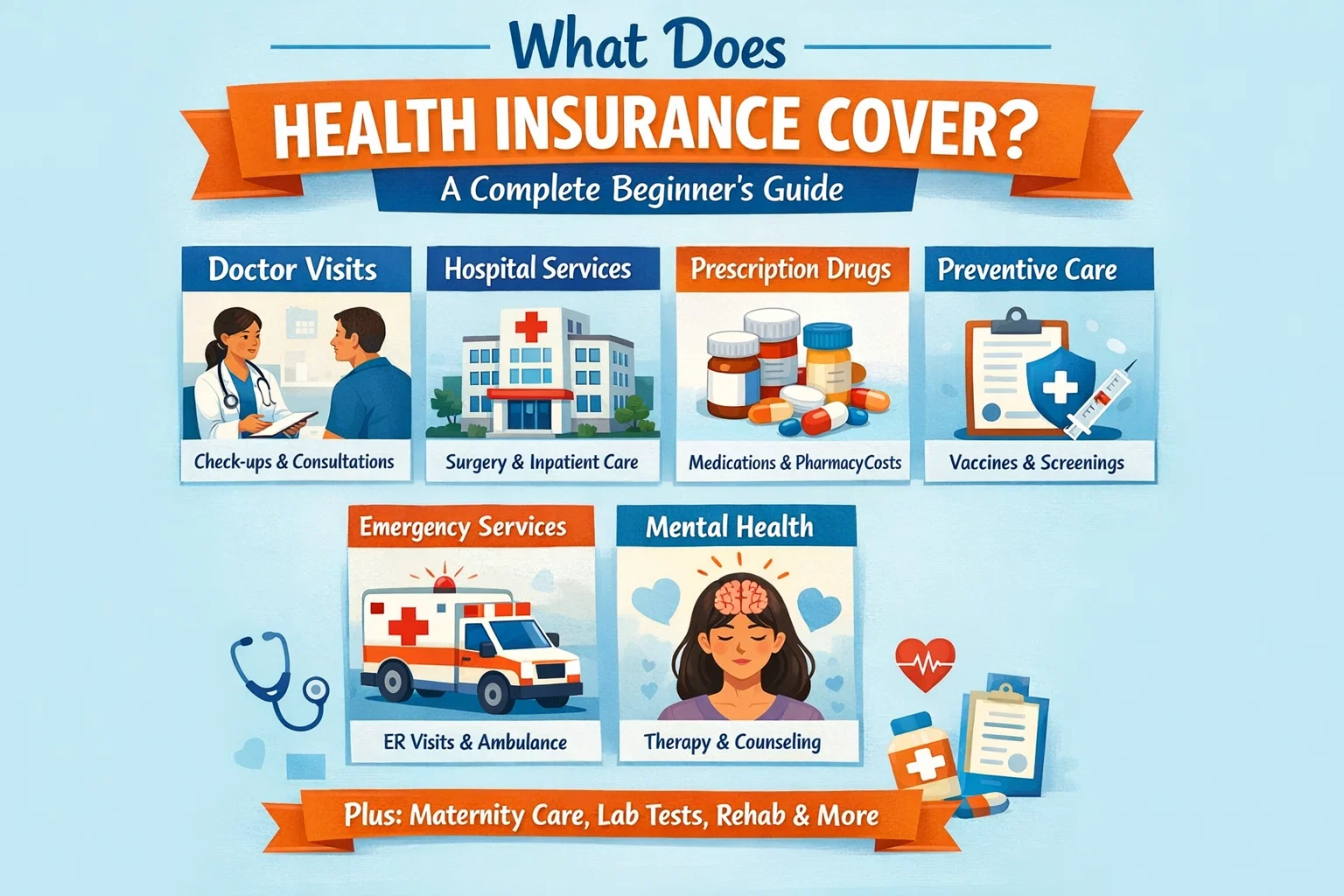
| Coverage Area | What It Includes |
|---|---|
| Doctor Visits | Primary care visits, specialist consultations, follow-ups |
| Hospitalization | Inpatient care, surgeries, room charges, nursing services |
| Emergency Services | Emergency room visits, urgent care, ambulance services |
| Prescription Drugs | Coverage for approved medications under the policy formulary |
| Preventive Care | Vaccinations, screenings, annual health checkups |
Preventive Care Coverage
Preventive care is one of the most valuable benefits of health insurance. Most Tier-1 country insurance plans cover preventive services at little or no additional cost.
These services help detect health issues early, reducing long-term treatment costs and improving overall health outcomes. Preventive care coverage often includes routine physical exams, blood tests, cancer screenings, immunizations, and wellness counseling.
Hospital and Surgical Coverage
Hospitalization is one of the most expensive healthcare services, making this coverage critical. Health insurance typically covers hospital stays, surgeries, intensive care, and post-surgical care.
Coverage may differ for in-network and out-of-network hospitals. Choosing hospitals within your insurer’s network usually results in significantly lower costs.
Prescription Drug Coverage
Most health insurance plans include prescription drug coverage, though the extent of coverage depends on the insurer’s formulary. Medications are often grouped into tiers, with lower tiers costing less than specialty drugs.
Understanding which medications are covered can save you substantial money, especially for long-term treatments.
Mental Health and Wellness Coverage
Modern health insurance plans increasingly recognize the importance of mental health. Coverage often includes therapy sessions, counseling, and mental health evaluations.
Mental wellness coverage is especially valuable in high-income countries where mental health services can be costly without insurance.
What Is Typically Not Covered?
While health insurance offers broad protection, it does not cover everything. Understanding common exclusions is essential to avoid unexpected expenses.
- Cosmetic or elective procedures
- Non-medically necessary treatments
- Experimental or unapproved therapies
- Services outside the provider network (in some plans)
- Pre-existing condition waiting periods (in limited cases)
Understanding Deductibles, Copays, and Coinsurance
Health insurance coverage is closely tied to cost-sharing mechanisms. Even when services are covered, you may still be responsible for part of the cost.
Deductibles require you to pay a certain amount before coverage begins. Copayments are fixed fees for services, while coinsurance represents a percentage of costs shared with the insurer.
Coverage Differences Between Plan Types
Health insurance coverage can vary significantly based on plan type. Common plan structures include:
- HMO: Lower cost, limited provider choice
- PPO: Greater flexibility, higher premiums
- EPO: No out-of-network coverage except emergencies
- High-Deductible Plans: Lower premiums, higher upfront costs
How to Check Your Health Insurance Coverage
To fully understand your coverage, review your policy documents carefully. Pay attention to the summary of benefits, exclusions, provider networks, and claims process.
Contacting your insurance provider directly can also help clarify coverage details and prevent costly misunderstandings.
Choosing the Right Coverage for Your Needs
Choosing health insurance coverage is a balance between affordability and protection. While lower premiums may seem attractive, insufficient coverage can result in significant financial strain.
Consider your medical history, lifestyle, and future healthcare needs when selecting coverage. This approach ensures both health security and financial stability.
Health Insurance Coverage and Financial Protection
In Tier-1 countries, medical expenses are among the leading causes of financial stress. Health insurance coverage acts as a financial safety net, protecting savings and long-term goals.
Comprehensive coverage not only improves access to healthcare but also provides peace of mind, knowing that major medical expenses are manageable.
Final Thoughts
Understanding what health insurance covers is essential for making informed decisions. From preventive care and hospitalization to prescriptions and mental health services, coverage plays a critical role in protecting both health and finances.
By reviewing policy details carefully and choosing the right coverage level, individuals and families can ensure long-term security and access to quality healthcare when it matters most.
Comments (3)