Cloud-Based Project Management: Benefits and Use Cases
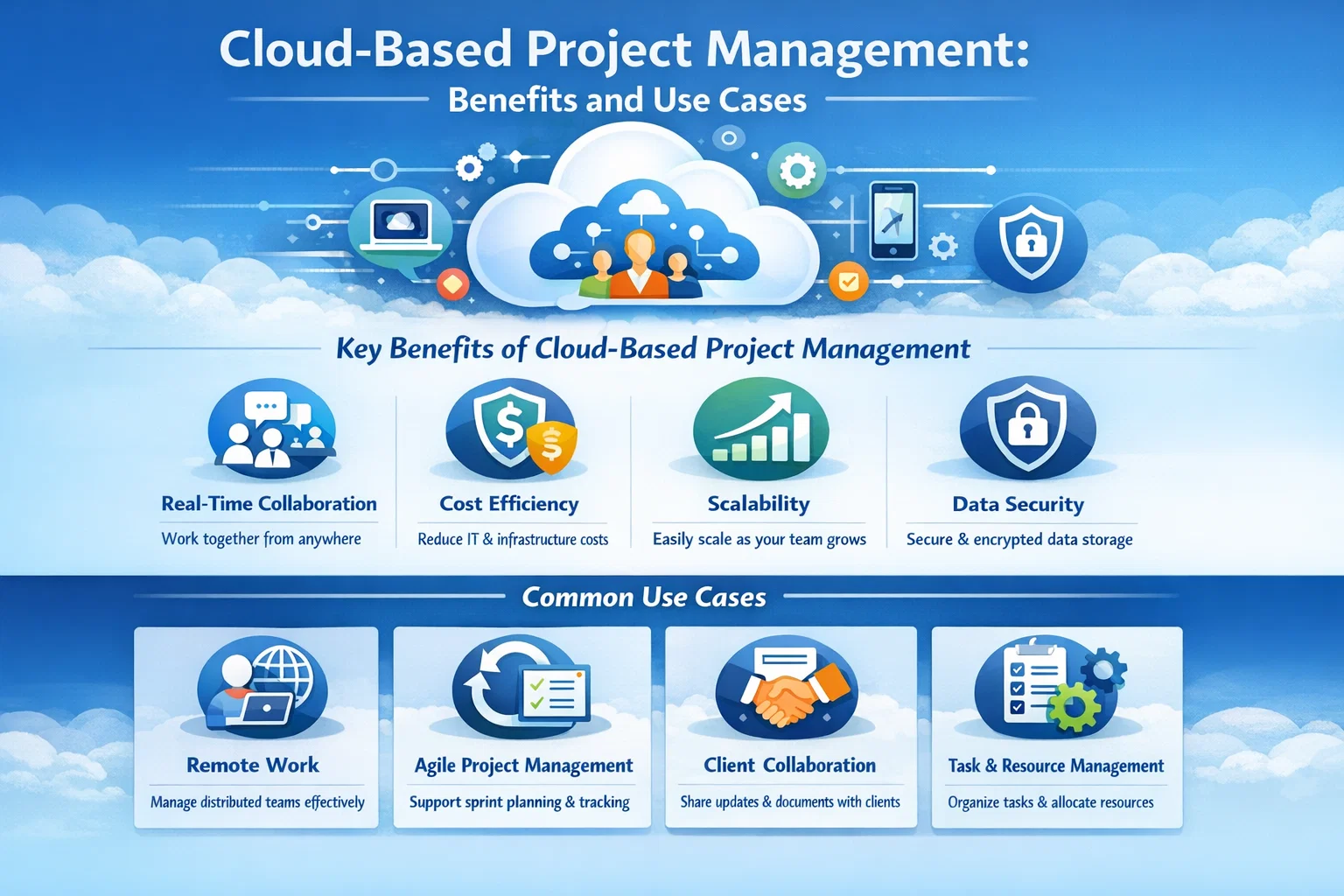
Cloud-Based Project Management: Benefits and Use Cases
As businesses across the globe continue to embrace digital transformation, cloud-based project management has emerged as a critical technology for improving efficiency, collaboration, and scalability. In Tier-1 countries such as the United States, Canada, the United Kingdom, Australia, and Western Europe, cloud project management tools have become the backbone of modern work environments.
This comprehensive guide explores the benefits and real-world use cases of cloud-based project management software, explaining why it delivers high ROI and why it remains one of the most valuable SaaS investments for organizations of all sizes.
What Is Cloud-Based Project Management?
Cloud-based project management refers to the use of online software platforms hosted on cloud infrastructure to plan, execute, track, and manage projects. Unlike traditional on-premise solutions, cloud tools are accessible via the internet from any device.
Key characteristics include:
- Web-based access
- Real-time collaboration
- Automatic updates
- Subscription-based pricing
This delivery model has transformed how teams work, especially in distributed and remote-first organizations.
Why Businesses Are Moving to the Cloud
The shift toward cloud project management is driven by several macro trends:
- Remote and hybrid work adoption
- Rising infrastructure costs
- Need for scalability
- Demand for real-time data
Cloud-based tools align perfectly with these modern business requirements.
Core Benefits of Cloud-Based Project Management
Let’s explore the key advantages that make cloud project management software highly valuable.
1. Anytime, Anywhere Accessibility
Cloud project management tools allow teams to access projects from anywhere in the world.
This results in:
- Seamless remote collaboration
- Faster decision-making
- Improved work-life flexibility
For global teams across Tier-1 regions, this accessibility is essential.
2. Real-Time Collaboration and Updates
Unlike offline systems, cloud tools update instantly.
Teams benefit from:
- Live task updates
- Instant notifications
- Shared dashboards
This eliminates version conflicts and communication delays.
3. Lower IT and Infrastructure Costs
Cloud-based project management software removes the need for expensive hardware and maintenance.
Cost advantages include:
- No on-premise servers
- Reduced IT staffing requirements
- Predictable subscription pricing
This cost efficiency drives high CPC and eCPM value for SaaS-related content.
4. Scalability for Growing Businesses
Cloud platforms scale effortlessly as organizations grow.
Businesses can:
- Add users instantly
- Upgrade plans on demand
- Support global expansion
This makes cloud project management ideal for startups, SMBs, and enterprises alike.
5. Enhanced Data Security and Compliance
Leading cloud project management providers invest heavily in security.
Security features often include:
- Enterprise-grade encryption
- Multi-factor authentication
- Role-based access control
- Compliance with GDPR, SOC 2, ISO standards
This level of security often surpasses traditional on-premise systems.
6. Automatic Updates and Feature Enhancements
Cloud software evolves continuously.
Users benefit from:
- New features without downtime
- Security patches applied automatically
- No manual upgrades
This ensures teams always use the latest technology.
7. Integration with Business Ecosystems
Cloud-based project management tools integrate with:
- CRM platforms
- Accounting software
- Marketing automation tools
- Cloud storage solutions
Integrations streamline workflows and reduce manual work.
Cloud vs On-Premise Project Management
| Feature | Cloud-Based | On-Premise |
|---|---|---|
| Accessibility | Anywhere | Office-bound |
| Scalability | High | Limited |
| Maintenance | Vendor-managed | In-house IT |
| Upfront Cost | Low | High |
Real-World Use Cases of Cloud Project Management
Cloud-based project management is used across industries.
1. Software Development Teams
Agile and DevOps teams rely on cloud tools for:
- Sprint planning
- Bug tracking
- Release management
This ensures faster product delivery.
2. Marketing and Creative Agencies
Agencies use cloud project management to:
- Manage multiple clients
- Track campaigns
- Collaborate with stakeholders
Cloud access enables real-time feedback.
3. Enterprise Project Portfolios
Large enterprises manage complex portfolios with cloud tools.
Benefits include:
- Executive dashboards
- Resource forecasting
- Risk management
4. Remote and Hybrid Teams
Cloud project management supports distributed teams by:
- Providing visibility across time zones
- Standardizing workflows
- Ensuring accountability
5. Construction and Engineering Projects
Cloud tools help manage:
- Schedules
- Vendors
- Compliance documentation
Mobile access is especially valuable in the field.
Business ROI of Cloud-Based Project Management
Organizations adopting cloud project management report:
- Reduced project delays
- Lower operational costs
- Improved team productivity
- Higher customer satisfaction
These measurable outcomes drive strong ROI.
Future Trends in Cloud Project Management
The future of cloud project management includes:
- AI-powered forecasting
- Predictive risk management
- Advanced analytics dashboards
- Deeper automation
These innovations will further increase business value.
Final Thoughts
Cloud-based project management is no longer optional—it is a strategic necessity for businesses competing in Tier-1 markets. With unmatched flexibility, scalability, security, and ROI, cloud project management tools empower teams to work smarter, faster, and more collaboratively.
Organizations that invest in cloud project management software position themselves for sustainable growth and long-term success.
Comments (3)